Authentic Leadership: A Complete Guide for Modern Leaders in 2026
In an era defined by rapid digital transformation, hybrid work models, and a growing demand for corporate transparency, the old archetype of the commanding, distant leader is crumbling. Employees, stakeholders, and consumers are no longer satisfied with polished personas and corporate jargon. They are hungry for something rarer: genuine human connection. This is where authentic leadership emerges not just as a “soft skill,” but as a critical business strategy for 2026.
Authentic leadership is the practice of leading with integrity, self-awareness, and a deep commitment to one’s core values. It is about being transparent with your team, admitting when you don’t have all the answers, and building trust through consistency. As we navigate an increasingly complex global landscape, this leadership style offers a powerful antidote to employee disengagement, burnout, and organizational cynicism. This guide will provide you with a comprehensive framework to understand, evaluate, and implement authentic leadership within your own professional journey.
Defining Authentic Leadership: More Than Just “Being Yourself”
While the term “authentic leadership” has gained significant traction in recent years, it is frequently misunderstood. It is not a license to be unfiltered, impulsive, or to treat the workplace as a therapy session. Rather, it is a disciplined approach to leadership grounded in four foundational pillars, as identified by researchers like Bill George and Bruce Avolio:
- Self-Awareness: A deep, ongoing understanding of your strengths, weaknesses, values, and emotions. This is the bedrock of authenticity.
- Internalized Moral Perspective: Making decisions based on your core values and ethical standards, rather than succumbing to external pressures from peers, shareholders, or market trends.
- Balanced Processing: Objectively analyzing all relevant data and perspectives before making a decision. This involves actively soliciting opposing viewpoints without becoming defensive.
- Relational Transparency: Presenting your true self to others, sharing your thoughts and feelings appropriately, and fostering an environment of openness and trust.
Authentic leadership is not a fixed personality trait you are born with; it is a pattern of behaviors that can be learned, practiced, and refined. It requires the courage to be vulnerable and the discipline to align your actions with your stated values, even when it is difficult.
Key Characteristics of an Authentic Leader in 2026
What does an authentic leader look like in practice? They are not necessarily the loudest person in the room. Instead, they exhibit a specific set of observable characteristics that build a powerful foundation for team management and organizational development.
- Purpose-Driven Vision: They lead with a clear “why.” Their decisions are anchored in a long-term purpose that transcends quarterly profits, providing a stable compass for their team.
- Emotional Intelligence (EQ): They possess high levels of empathy and social skill. They can read the room, manage their own reactions, and connect with team members on a human level.
- Radical Candor: They care personally while challenging directly. They are not afraid to give difficult feedback, but they do so from a place of genuine concern for the individual’s and the organization’s growth.
- Consistency & Reliability: Their words match their actions. Team members know what to expect, creating a psychologically safe environment where people feel secure enough to take risks.
- Humility: They are quick to give credit and slow to take it. They admit mistakes openly and view failures as learning opportunities for the entire team.
Benefits vs. Potential Drawbacks: A Balanced View
No leadership style is a silver bullet. While authentic leadership yields significant advantages, it also presents unique challenges that must be managed. The following table provides a balanced comparison for professionals and executives.
| Benefits | Potential Drawbacks & Risks |
|---|---|
|
|
Authentic Leadership in Action: Real-World Application
The power of this leadership style is best understood through practical application. Consider a scenario common in 2026: a mid-level manager, Sarah, leading a distributed team that is struggling with burnout after a major product launch.
The Traditional Approach: A traditional leader might send a stern email demanding higher productivity numbers, citing the quarterly targets. This often leads to further disengagement and quiet quitting.
The Authentic Approach: Sarah schedules individual video calls. She begins by sharing her own struggle: “I’ll be honest, I’ve been running on fumes myself, and I know you have been too. I didn’t handle the last sprint’s pressure well, and I can see I didn’t give you enough support. I need your honest feedback on what broke down so we can fix it together.”
By demonstrating relational transparency (admitting her own struggle) and balanced processing (asking for input), Sarah does several things. She validates her team’s experience, removes the stigma of admitting exhaustion, and invites co-creation of a solution. The result is not a drop in performance, but a surge in loyalty and a collaborative redesign of the team’s workflow that actually increases sustainable output. This is authentic leadership as a practical tool for team management and organizational development.
How to Develop Authentic Leadership Skills
Authentic leadership is not a switch you flip; it is a muscle you build through deliberate practice. Here is a practical roadmap for professionals and aspiring leaders:
- Conduct a Personal Values Audit: Take 30 minutes. Write down your top five non-negotiable values (e.g., integrity, creativity, service, family). Then, look at your calendar from the last week. Does your time allocation reflect those values? This gap is where your work begins.
- Seek Honest Feedback (The 360° Review): Ask a trusted mentor, a peer, and a direct report: “When am I at my best? When am I not being my authentic self?” Prepare to hear things that sting. This is the raw material for self-awareness.
- Practice “The Pause”: Before reacting to a high-stakes email or a tense meeting, take three deep breaths. This pause creates space for your internalized moral perspective to guide your response, rather than raw emotion or external pressure.
- Share a Learning Story: In your next team meeting, share a story about a mistake you made and what you learned from it. This small act of vulnerability signals that it is safe for others to do the same, unlocking collective growth.
- Establish Boundaries: Authenticity does not mean 24/7 availability. Be transparent about your working hours and energy limits. “I am most focused in the mornings; I will not be checking messages after 7 PM.” This models healthy behavior for your team.
Common Misconceptions and Pitfalls to Avoid
Even well-intentioned leaders can fall into traps when attempting to adopt this style. Understanding these common mistakes is crucial for your professional development.
- Misconception: “Authenticity means saying everything I think.”
Reality: Authenticity is about being genuine, not unfiltered. It requires tact, timing, and emotional intelligence. “Radical candor” must be balanced with “care personally.” - Misconception: “I must be perfect to be authentic.”
Reality: Perfectionism is the enemy of authenticity. True authenticity is built on the courage to be imperfect and the humility to grow. - Pitfall: Using vulnerability to manipulate.
Some leaders share personal stories to gain sympathy or to deflect accountability. This is faux authenticity. True vulnerability is about connection and growth, not emotional manipulation. - Pitfall: Ignoring context.
The same authentic behavior that works in a one-on-one coaching session may be inappropriate in a formal board presentation. Authentic leaders are contextually intelligent; they adapt their delivery without changing their core values.
For more leadership insights, explore The Minimalist Leader: Achieving More with Autonomous Teams by Sarah Abraham — available now on Google Play Books.
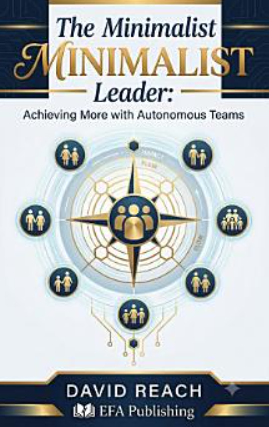
Lead Smarter, Not Harder
Discover proven strategies for leading with clarity, empowering autonomous teams, and achieving more with less. This practical ebook by Sarah Abraham is essential reading for modern leaders.
Conclusion: The Strategic Advantage of Being Real
In the landscape of 2026, where artificial intelligence handles routine tasks and human connection becomes the ultimate competitive advantage, authentic leadership is not a luxury—it is a strategic imperative. It is the leadership style that builds the resilient, innovative, and deeply committed teams capable of navigating uncertainty.
Your Actionable Takeaways:
- Start with a single conversation. This week, have one conversation where you intentionally listen more than you speak and share a genuine piece of your perspective.
- Audit your alignment. Review your last major decision. Was it driven by your core values or by external pressure? Use this insight to guide your next choice.
- Embrace the discomfort. Growth in authentic leadership feels awkward. The tightness in your chest when you admit a mistake is the sign that you are building real strength.
The most powerful tool you have as a leader is not your title, your authority, or your expertise. It is your unique, genuine self. When you lead from that place of truth, you don’t just manage people—you inspire them. And in today’s world, that is the only kind of business leadership that will last.
Further Reading
- Strategic Leadership: A Complete Guide for Modern Leaders in 2026
- Transactional Leadership: A Complete Guide for Modern Leaders in 2026
Disclaimer: This article is for informational and educational purposes only. Always adapt leadership strategies to your specific context and organizational culture.
Leave a Reply