Strategic Leadership: A Complete Guide for Modern Leaders in 2026
In the volatile, uncertain, complex, and ambiguous (VUCA) landscape of 2026, the difference between an organization that thrives and one that merely survives often comes down to one critical factor: the quality of its leadership. Yet, not all leadership is created equal. While operational leaders focus on efficiency and tactical leaders manage the day-to-day, strategic leadership operates on a different plane entirely. It is the art and science of anticipating the future, aligning resources, and inspiring a shared vision that navigates complexity with clarity.
As we move deeper into an era defined by AI disruption, shifting workforce demographics, and global economic recalibration, the demand for leaders who can think systemically, act decisively, and adapt gracefully has never been higher. This comprehensive guide will dissect the core principles of strategic leadership, provide actionable frameworks for development, and reveal why this specific leadership style is the most critical asset for any executive, entrepreneur, or manager in 2026.
What is Strategic Leadership? Beyond the Buzzword
Strategic leadership is not simply a fancy title for the CEO. It is a distinct leadership style characterized by the ability to influence others to voluntarily make decisions that enhance the long-term viability and success of the organization. Unlike transactional leadership, which focuses on rewards and punishments, or transformational leadership, which emphasizes inspiration and change, strategic leadership bridges the gap between vision and execution.
At its core, strategic leadership involves three interconnected domains:
- Strategic Thinking: The ability to analyze complex systems, identify patterns, and forecast future trends. It is about asking “what if?” and “why?” rather than just “how?”
- Strategic Acting: The discipline to translate vision into actionable initiatives. This involves resource allocation, priority setting, and organizational alignment.
- Strategic Influence: The capacity to build consensus, foster a shared sense of purpose, and create a culture that supports long-term goals, even when short-term pressures are intense.
In 2026, strategic leadership has evolved to include a fourth critical dimension: Strategic Agility. Given the pace of technological change, a leader must hold a long-term vision while remaining radically adaptable in their tactics. This is the paradox of modern strategic leadership—being simultaneously resolute and flexible.
Key Characteristics of a Strategic Leader
Strategic leaders are not born; they are cultivated through experience and deliberate practice. However, they consistently exhibit a set of defining traits that separate them from other leadership skills sets. These characteristics form the bedrock of effective executive leadership.
- Systems Thinking: They see the organization as an interconnected whole. A decision in marketing has ripple effects in operations, finance, and human resources. They map these relationships before acting.
- Futuristic Orientation: They spend a disproportionate amount of time looking outward and forward. While others are fighting fires, they are building firebreaks. They are obsessed with trends, competitor moves, and emerging technologies.
- Decisive Action Under Uncertainty: Strategic leaders understand that perfect information is a myth. They make high-stakes decisions with incomplete data, using a blend of analysis and intuition. They prioritize speed over perfection.
- Emotional & Cognitive Complexity: They can hold two opposing ideas in their mind simultaneously (e.g., “We must cut costs” and “We must invest in innovation”) without losing effectiveness. They manage their own emotions while navigating the anxieties of their teams.
- Political Savvy & Stakeholder Management: They are masters of influence. They understand the formal and informal power structures within and outside the organization and use this knowledge to drive change without creating unnecessary resistance.
The Dual Reality: Benefits vs. Drawbacks of Strategic Leadership
No leadership style is without its trade-offs. Strategic leadership offers immense power, but it also carries inherent risks. The following table outlines the key advantages and potential pitfalls for leaders and their organizations.
| Benefits of Strategic Leadership | Potential Drawbacks & Risks |
|---|---|
| Sustainable Growth: Creates long-term value rather than short-term wins. Builds competitive moats that are hard to replicate. | Risk of Detachment: Leaders may become so focused on the “big picture” that they lose touch with ground-level realities, leading to poor execution. |
| Organizational Alignment: Ensures every department and team is rowing in the same direction toward a common vision, reducing wasted effort. | Analysis Paralysis: The emphasis on thinking and planning can sometimes delay action, causing the organization to miss market windows. |
| Proactive Adaptation: Anticipates disruption rather than reacting to it. The organization becomes a trendsetter, not a follower. | High Cognitive Load: This style is mentally exhausting. Leaders must constantly balance competing priorities, which can lead to burnout if not managed. |
| Enhanced Talent Retention: High-potential employees are drawn to leaders with a clear vision and a sense of purpose, reducing turnover. | Complex Communication: Strategic visions can be abstract. If not translated effectively, teams may feel confused or disconnected from the daily work. |
Strategic Leadership in Action: A 2026 Case Study
Consider the hypothetical but highly realistic scenario of “NexGen Health,” a mid-sized healthcare technology firm in 2026. The industry is being disrupted by generative AI diagnostics and a shift toward decentralized, home-based care. The CEO, Maria, exemplifies strategic leadership.
The Challenge: NexGen’s core product—a legacy patient management system—was profitable but losing market share to AI-native competitors. The board was pressuring for immediate cost-cutting to protect margins.
The Strategic Response: Instead of slashing R&D (the easy, tactical move), Maria performed a strategic audit. She identified three emerging trends: 1) The rise of wearable health data, 2) A shortage of primary care physicians, and 3) Patient demand for predictive, not reactive, care.
Execution: Maria did not abandon the legacy product. Instead, she used its cash flow to fund a “moonshot” division focused on an AI-powered triage platform. She created a “dual operating system”—the traditional business for stability and an agile unit for innovation. She personally mentored the new division’s leader, ensuring alignment with the long-term vision. She communicated this “and/also” strategy relentlessly, explaining why the company was investing in the future while optimizing the present.
The Result: Eighteen months later, the new platform is gaining traction, and the legacy system has been stabilized. NexGen is positioned not as a legacy vendor, but as a pioneer in predictive health management. Maria’s ability to think strategically, act decisively, and influence stakeholders saved the company from a slow decline.
How to Develop Strategic Leadership Skills
Strategic leadership is not a title you are given; it is a muscle you build. For professional development and organizational development, here is a practical roadmap for cultivating this style in 2026.
- Schedule “White Space” Thinking: Block out 2-4 hours per week on your calendar for pure strategic thinking. No emails, no meetings. Use this time to read industry reports, analyze competitors, and map out scenarios. This is non-negotiable for business leadership.
- Practice the “5 Whys” and “5 Hows”: When facing a problem, ask “why” five times to get to the root cause, then ask “how” five times to build a robust implementation path. This trains your mind to move between abstraction and detail.
- Seek Disconfirming Evidence: A common cognitive bias is confirmation bias. Actively look for information that challenges your core assumptions. Assign a “red team” in your organization to poke holes in your strategy.
- Develop a Strategic Network: Your network should extend beyond your industry. Talk to leaders in technology, academia, and even the arts. Cross-pollination of ideas is a powerful source of strategic insight.
- Use the “Strategy Cascade”: For any major initiative, ensure you can answer these three questions: 1) Where will we play? (Market/segment), 2) How will we win? (Differentiator), and 3) What capabilities must we have? (Resources/Skills). If you can’t, the strategy is not ready.
Common Misconceptions and Mistakes in Strategic Leadership
Even experienced leaders fall into traps. Understanding these common management and leadership errors can save you years of frustration.
- Mistake #1: Strategy is a Plan, Not a Practice. Many leaders write a strategic plan in January and file it away until December. Strategic leadership is a continuous, iterative process of learning and adapting. The plan is a hypothesis, not a scripture.
- Mistake #2: Confusing Activity with Progress. A busy leader is not necessarily a strategic leader. Being strategic often means doing less, but doing it with more impact. It means saying “no” to good ideas so you can say “yes” to great ones.
- Mistake #3: Ignoring Culture. The most brilliant strategy will fail if the culture does not support it. Strategic leaders understand that culture eats strategy for breakfast. They invest as much time in shaping values and behaviors as they do in shaping the plan.
- Mistake #4: Leading from the Ivory Tower. Strategic leadership is not about being aloof. The best strategic leaders are deeply curious about the front line. They practice “management by walking around” to stay grounded in reality.
For more leadership insights, explore The Minimalist Leader: Achieving More with Autonomous Teams by Sarah Abraham — available now on Google Play Books.
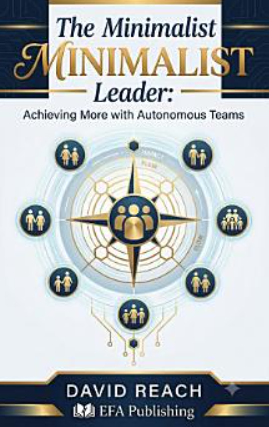
Lead Smarter, Not Harder
Discover proven strategies for leading with clarity, empowering autonomous teams, and achieving more with less. This practical ebook by Sarah Abraham is essential reading for modern leaders.
Conclusion: Your Strategic Leadership Imperative
In 2026, the world does not need more managers; it needs more strategic leaders. It needs individuals who can navigate the noise, see the signal, and guide their organizations toward a future that is not just profitable, but also purposeful. Strategic leadership is the ultimate competitive advantage because it is the hardest to copy. Competitors can replicate your products and processes, but they cannot replicate your unique way of thinking and seeing the world.
Your Actionable Takeaways for This Week:
- Audit your calendar: How much time did you spend on strategic thinking vs. tactical execution? Aim for a 20/80 split, moving toward 30/70.
- Identify one assumption you hold about your business or market and actively try to disprove it.
- Hold a “Strategy Circle” with your direct reports. Spend 30 minutes discussing a future trend, not a current fire.
Strategic leadership is not a destination; it is a discipline. It requires courage to make tough choices, humility to learn from failure, and the wisdom to know that the best path forward is rarely the easiest one. Begin today. Your organization—and your future self—will thank you.
Further Reading
- Democratic Leadership: A Complete Guide for Modern Leaders in 2026
- Transformational Leadership: A Complete Guide for Modern Leaders in 2026
Disclaimer: This article is for informational and educational purposes only. Always adapt leadership strategies to your specific context and organizational culture.
Leave a Reply